
Texas Toxic Exposure Lawyer
Chemical Injury.
Hold Them Accountable.
Toxic exposure injuries often don't show up immediately — symptoms can take months or years to surface, by which time critical evidence has disappeared. Trey Barton Law investigates toxic exposure claims throughout Texas, pursuing the employers, contractors, and chemical manufacturers whose negligence caused the harm. Whether the exposure happened on an oilfield, at a refinery, or on a job site, we build the evidence and fight for full compensation.
Since 2020
Verdict
Settlement
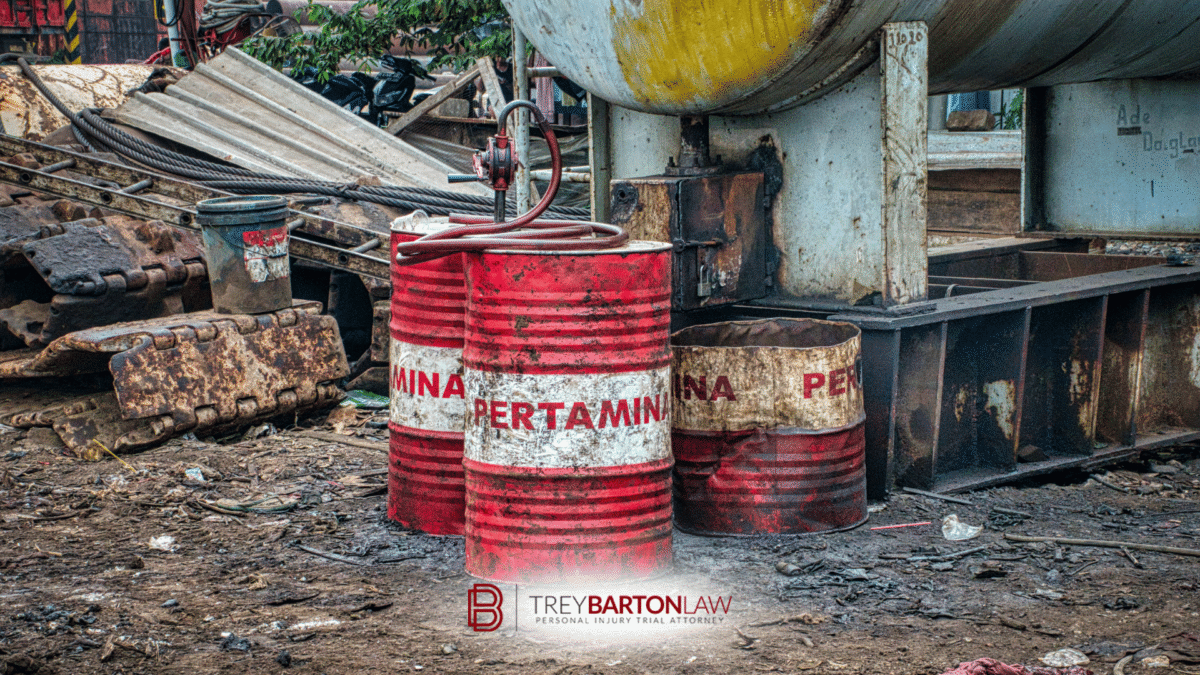
The Texas toxic exposure oilfield lawyer team at Trey Barton Law represents employees and families affected by exposure to harmful chemicals and toxic fumes, whether through fires, explosions, or prolonged exposure. These cases often involve long-term health effects caused by improper handling of hazardous substances, inadequate protective measures, or safety violations. Our Texas oil and gas toxic exposure attorneys have extensive experience determining liability and proving fault. We have a proven track record of holding contractors, service providers, equipment manufacturers, and other responsible parties accountable. To secure the maximum compensation for injury victims, our oilfield accident law firm files personal injury lawsuits against third-party defendants.
Our Texas oil and gas exposure lawyers handle personal injury claims on a contingency fee basis. This means clients don’t pay any upfront costs unless we recover damages on their behalf.
To schedule a free case review with our experienced attorneys, call 832-916-2526 or fill out our contact form.
Fighting for Texas Oil and Gas Workers Injured by Hazardous Chemicals
From the Permian Basin to the Gulf Coast refineries, exposure to toxic chemicals, deadly gases, and hazardous substances remains one of the most serious threats facing the oil and gas industry and energy sectors. Workers exposed to toxic chemicals are often harmed without warning, a hatch opened, equipment malfunction during a turnaround, or years of handling frac sand without personal protective equipment.
Our legal team helps injured oilfield workers exposed to toxic chemicals or facing severe adverse health effects from long-term exposure to common hazardous substances in the energy sector. We also represent families of employees killed by toxins on the job.
Working in the gas and oil industry poses significant health risks, and oil companies must follow safety protocols to the letter to avoid serious health issues for their crews. These cases require a deep knowledge of industrial hygiene, occupational medicine, and the complex web of employers and other parties that populate oil extraction sites, refineries, and processing facilities.
Employees in the oil and gas industry can be exposed to toxic chemicals through multiple pathways. Common causes include:
- Inhalation of harmful chemicals, gases, vapors, fumes, and dust that are airborne
- Skin contact with contaminated surfaces, liquids, drilling muds, and certain chemicals
- Skin contact and absorption through prolonged exposure
- Ingestion from contaminated food, drinks, cigarettes, or tobacco products from unwashed hands or unprotected items
- Eye contact with chemical splashes, aerosols, or airborne particulates can cause permanent eye injuries
- Injection through puncture wounds, cuts, or high-pressure leaks
- Secondary exposure from contaminated clothing, boots, or protective gear
- Environmental exposure from contaminated water, soil, or living quarters
Most Toxic Gases In The Oil and Gas Industry
There are many common hazardous substances in the oil and gas industry. The most dangerous chemicals and compounds include:
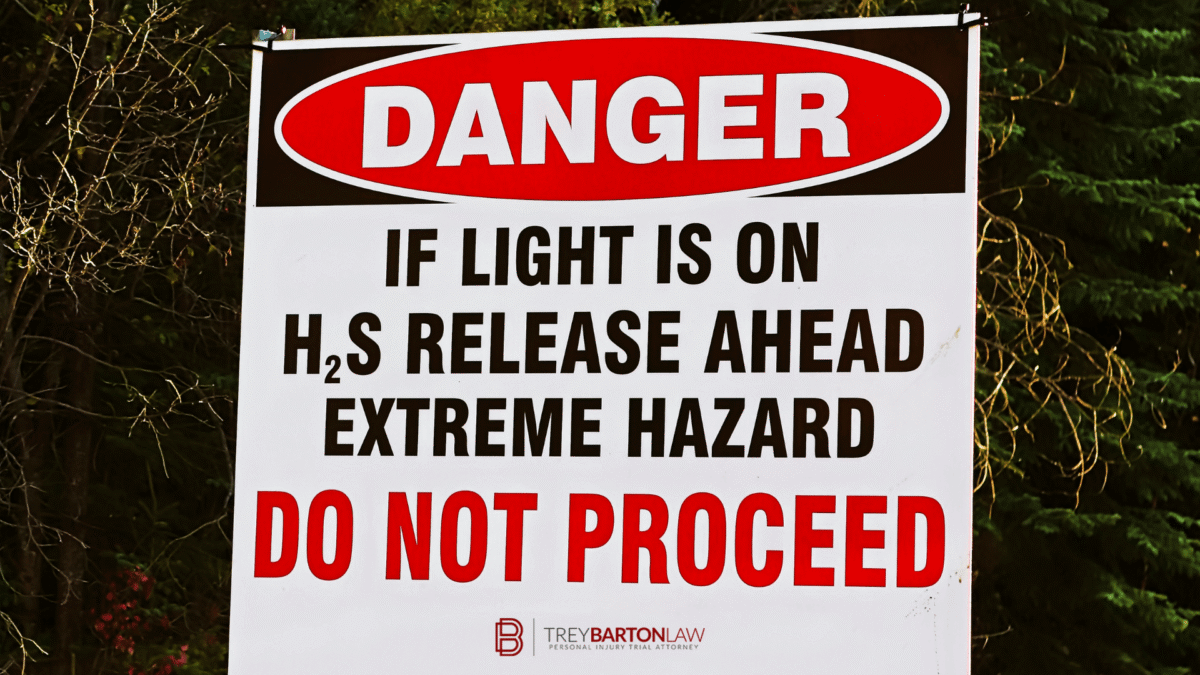
Legal Representation For Texas Hydrogen Sulfide Exposure Claims
- Wellheads & production pads
- Tank batteries & gun barrel tanks
- Confined spaces & vessels
- Pipelines & gathering systems
- Sour gas processing facilities
- Refineries & petrochemical plants
- Wastewater pits & produced water
- Swabbing & workover operations
- No H₂S monitors or broken detectors
- Failure to train workers on H₂S hazards
- No written emergency response plan
- Inadequate SCBA equipment or none provided
- No wind socks or muster point signage
- Failure to test atmosphere before entry
- Ignored or overridden alarm systems
- No buddy system in sour gas areas
The Occupational Safety and Health Administration sets strict limits on hydrogen sulfide exposure:
Permissible exposure limit (PEL) for H2S:
- Ceiling limit: 20 ppm
- Peak limit: 50 ppm for 10 minutes maximum
Immediately dangerous to life or health (IDLH): 100 ppm; concentrations about 500 ppm can cause instant death.
Our Texas H2S exposure lawyers have extensive experience litigating cases involving these common causes:
- Drilling through sour gas formations in the Permian and Eagle Ford
- Opening thief hatches on tanks without air monitoring
- Flowback and well completion operations that release high concentrations of H2S and drilling fluids
- Wellhead blowouts and uncontrolled sour gas releases
- Workover operations on older wells with known H2S history
- Tank battery and saltwater disposal facility operations where H2S accumulates
Coming in contact with hydrogen sulfide can cause many injuries if it doesn’t kill the person. Our personal injury lawyers often handle Texas H2S lawsuits involving:
- Knockdown incidents: losing consciousness from high-concentrations of H2S, often suffering falls and secondary trauma
- Pulmonary edema and respiratory issues or failure requiring immediate medical treatment, including emergency intubation and intensive care
- Long-term injuries involving neurological damage
- Cardiovascular health problems and internal organ damage
- Wrongful death caused by fatal H2S levels
H2S oilfield accident cases often involve multiple liable parties. A Texas H2S exposure lawyer from our law firm can help victims take legal action to seek compensation and justice.
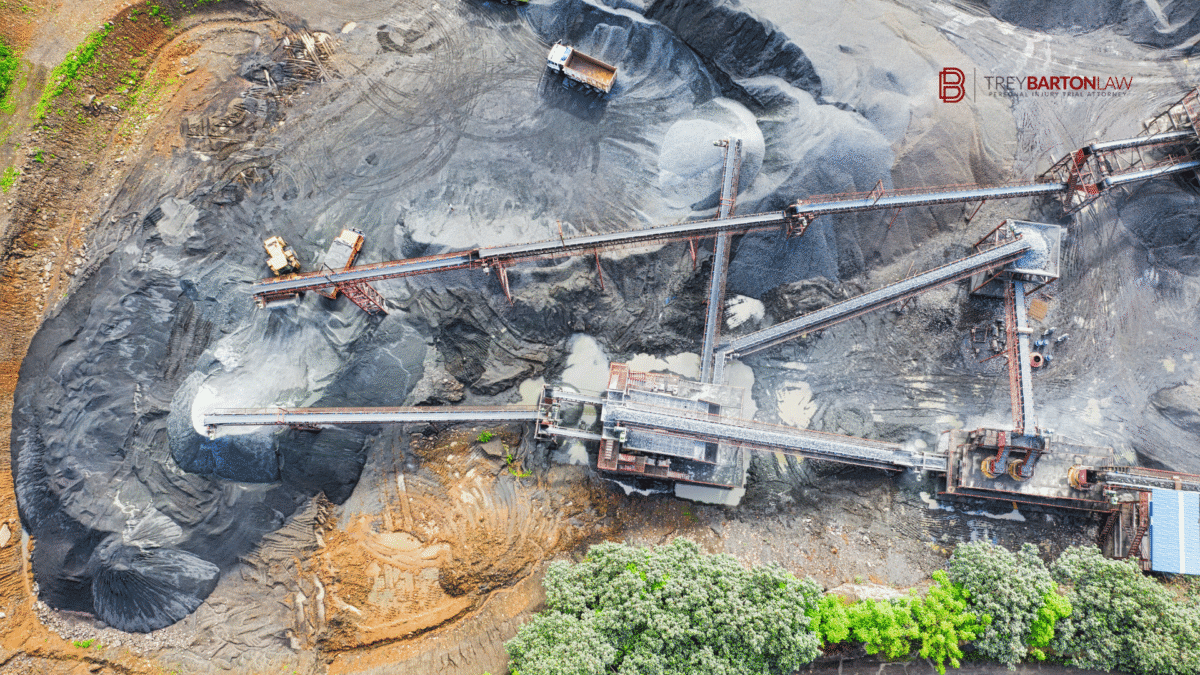
Texas Benzene Exposure Attorney Representing Injured Oil Field Workers
Benzene Exposure in Refineries and Petrochemical Plants
The oil industry is known for benzene dangers, from the wellhead to the finished product terminal. The most dangerous jobs tend to include:
- Crude oil handling and tank gauging operations
- Refinery process unit maintenance and turnarounds
- Loading and unloading operations at terminals and tank farms around gasoline and other chemicals
- Laboratory sampling and testing
- Vessel entry and tank cleaning activities involving direct contact
The OSHA benzene exposure limits include:
- 8-hour time weighted average: 1 ppm
- 15-minute limit: 5 ppm.
Claims For Benzene Cancer and Other Workers' Health Effects
The conditions most commonly associated with occupational benzene exposure include:
- Acute myeloid leukemia (AML)
- Myelodysplastic syndrome (MDS), which often progresses to leukemia
- Non-Hodgkin lymphoma and multiple myeloma
- Aplastic anemia from long-term exposure
- Chronic lymphocytic leukemia (CLL) and other blood cancers
Our Texas benzene exposure law firm works with industrial hygienists, oncologists, and hematologists to build compelling personal injury lawsuits that demonstrate the connection between the workplace accident and subsequent serious health issues.
Houston Ship Channel + Texas Gulf Coast Benzene Claims
Major industrial complexes in Houston, Beaumont, Port Arthur, Texas City, Pasadena, and surrounding communities employ tens of thousands of employees who handle benzene-containing substances daily.
Our Texas oilfield toxic exposure attorney team provides legal representation for employees throughout the Gulf Coast industrial corridor, including cases involving:
- Refinery and chemical plant exposure in Houston, Baytown, and the surrounding Ship Channel area
- Beaumont and Port Arthur refinery accidents from crude oil processing
- Texas City petrochemical staff who face long-term exposure at major manufacturing facilities
- Pasadena and Deer Park chemical plant employees handling benzene-containing streams
- Harm to contract maintenance crews moving between facilities during turnarounds and major projects
- Communities affected by chemical exposure from flaring, fugitive emissions, and industrial accidents
A Texas industrial accident attorney from our law firm can explain your legal options for filing a lawsuit to recover financial compensation.
Texas Silicosis Attorney For Silica Dust Exposure in Fracking Operations
Hydraulic fracking has transformed the state’s oil and gas industry. However, thousands of employees have suffered long-term health effects from dangerous silica concentrations at fracking sites.
Our Texas silicosis lawyers are adept at handling the legal process for several distinct forms:
- Acute or accelerated silicosis from short-term but high concentrations, causing severe respiratory issues
- Chronic silicosis that develops after long-term exposure, causing difficulty breathing and tissue scarring
- Progressive massive fibrosis, where silicotic nodules combine into large masses of scar tissue that destroy lung function
- Increased risk of lung cancer and tuberculosis
The highest exposure to toxic silica sand during fracking occurs at:
- Frac sand handling and transfer at well sites
- Sand king and T-belt operations without dust suppression
- Blender and pump truck operations in dusty conditions
- Maintenance and cleanup activities that disturb settled silica dust
- Sand storage and logistics at Permian Basin transload facilities
Silica sand poses significant health risks for frac crews, sand haulers, operators, and other staff when oil and gas companies fail to take adequate safety measures.
OSHA set limitations on respirable crystalline silica at 50 micrograms per cubic meter as an eight-hour time-weighted average. Most fracking locations operate at much higher levels, totally ignoring these safety regulations. This leads to a significant number of fracking injuries in Texas.
Companies violate silica safety requirements by:
- Failing to implement engineering controls and dust suppression systems at sand transfer points
- Not providing adequate respiratory protection and fit-tested respirators
- Lack of air monitoring
- Ignoring medical surveillance requirements
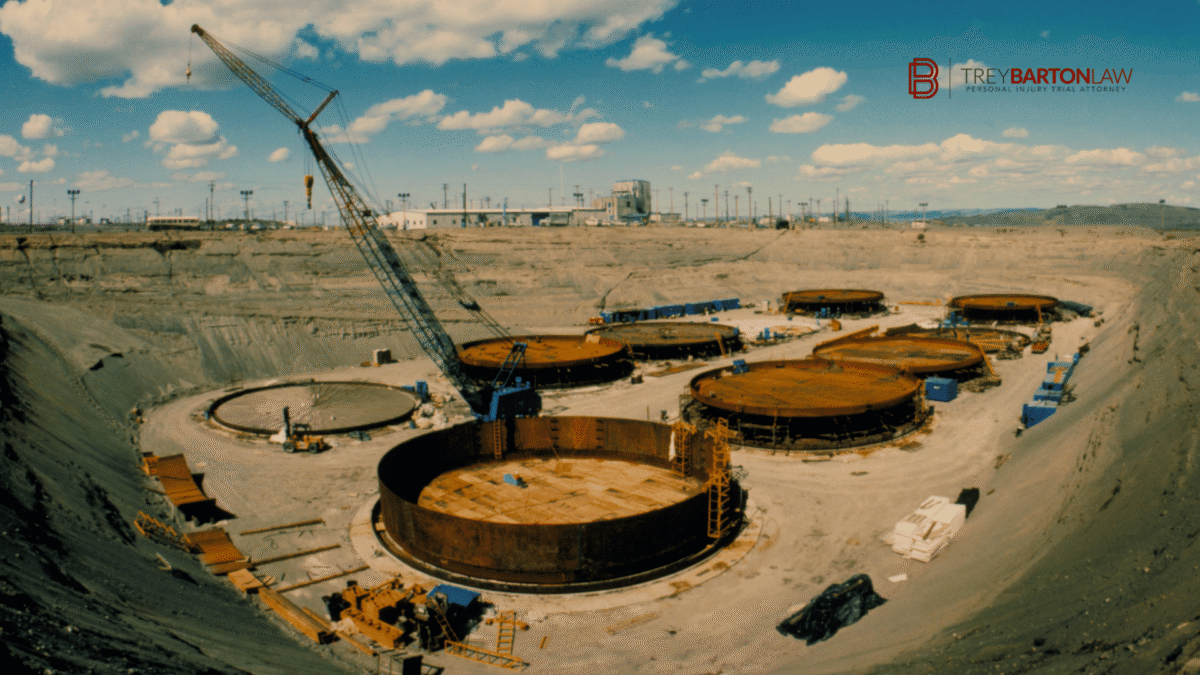
NORM and Radioactive Exposure in Texas Oil and Gas
Radioactive elements, including radium, thorium, and their decay products, concentrate in scale, sludge, and other residues throughout the oil and gas industry. NORM-related oilfield accidents can occur in various types of cases:
- Scale buildup inside tubing, separators, heater treaters, and other vessels
- Filter sock handling at saltwater disposal facilities
- Tank cleaning and vessel entry operations with NORM-contaminated sludge and residues
- Pipe yards and equipment storage areas with hot minerals
- Well plugging and abandonment operations
OSHA limits for ionizing radiation include:
- 1.25 rem per quarter for whole body exposure
- Adults: 100 pCi/L averaged over a 40-hour workweek
- Minors: 10% of the standard limitations
- Cumulative lifetime dose restrictions apply when exceeding quarterly allowances
- Texas NORM waste regulations include:
- Waste with radioactivity at levels above the exemption levels must be managed in accordance with the Railroad Commission’s disposal regulations
- NORM-contaminated equipment that is being discarded must be decontaminated beforehand
- Safety regulations for identifying and tagging contaminated equipment
Employees exposed to NORM face serious long-term health effects, including:
- Increased cancer risk from alpha and gamma radiation
- Leukemia, lung, and bone cancer from ingestion or inhalation of radioactive particles
- Other illnesses that may not manifest until years later
Our Texas NORM injury lawyers can explain your legal rights, determine if you’re entitled to compensation, and if so, file a lawsuit to secure fair compensation on your behalf.
Claims For Chemical Exposure in Oil and Natural Gas Drilling and Completions
Beyond the dangers of H2S, benzene, silica, and NORM, oilfield workers are exposed to countless other common hazardous substances from drilling, completion, and production operations. These toxic substances can cause serious injuries, like chemical burns, and chronic conditions.
Drilling Mud + Fluid Chemical Exposure
Drilling fluid systems contain various types of hazardous chemicals, such as:
- Barite, benite, and other weighting agents that cause respiratory irritation and lung damage upon inhalation
- Skin contact with synthetic oil-based mud components penetrate causing systemic toxicity, often with no initial skin irritation
- Skin contact with caustic soda and other PH-control cause severe burns
- Biocides and corrosion inhibitors containing heavy metals and organic compounds can harm through inhalation (chemical bronchitis and difficulty breathing, pulmonary fibrosis, cancer, and neurological damage) and ingestion through contaminated food or drinks (renal failure, acute poisoning, and comas)
Derrick hands, mud engineers, shaker hands, and other crew members face a daily risk of drilling fluid and other chemical exposure.
Frac Chemical + Additive Exposure
Hydraulic fracturing operations introduce additional harmful chemicals, such as:
- Hydrochloric acid spills and vapor release during acidizing
- Friction reducers and surfactants that cause severe skin irritation, eye injuries, and respiratory issues
- Biocides in frac fluids and flowback water cause acute toxicity, developmental, reproductive, and neurological damage
- Scale inhibitors and paraffin solvents (VOCs and other chemicals) cause eye and internal organ damage, respiratory irritation and pulmonary edema, lipoid pneumonia, alveolitis, and fibrosis
Frac crews, handlers, and flowback operators often pay the price for spills, defective equipment, or inadequate containment that cause oilfield accidents.
Toxic Gas From Oil Wells - Hazardous Chemicals in Well Servicing and Workover Rigs
Well servicing and workover operations present concentrated hazardous chemical exposure in a fast-paced environment where shortcuts in safety measures are common. This often includes:
- Hot oil and paraffin solvent burns and inhalation
- Acid stimulation and well cleanout-related chemical exposure
- Nitrogen and CO2 asphyxiation dangers
- Methanol and hydrate inhibitor poisoning through inhalation and absorption through skin contact
Our oilfield exposure injury lawyers are experienced in navigating the legal process of Texas workover rig accident claims.
The pressure to maximize well uptime and minimize service rig costs often causes oil and gas companies to cut corners on chemical safety measures, exposing employees to significant risks.
Toxic Exposure in Texas Refineries and Plant Turnaround Services
Vessel entry operations during turnarounds expose oilfield workers to:
- Residual hydrocarbons and pyrophoric materials that ignite on contact with air
- Catalyst dust containing heavy metals like nickel, cobalt, and vanadium compounds
- Sludge and tank bottom hazardous chemicals
- Immediately dangerous to life or health (IDLH) atmospheres in columns, drums, exchangers, and other vessels
Tank cleaners, vessel entry staff, and confined space attendants face significant risks when refineries fail to adequately prepare them for entry or provide proper respiratory protection.
Oilfield accidents involving hazardous chemicals often occur during turnaround periods. Common situations include:
- Hydrofluoric acid at alkylation units (one of the most dangerous chemicals in refinery operations)
- Sulfuric acid and caustic soda releases
- Hydrocarbon vapor releases from opened process lines and equipment
- Asbestos and refractory ceramic fiber in older units
Contract workers maintaining these systems face disproportionate risks during turnarounds. Our Texas oilfield exposure lawyer team can help determine whether inadequate training or a lack of communication from the host refinery caused or contributed to the toxic chemical exposure.
Holding Responsible Parties Accountable For Texas Toxic Chemical Exposure in Oilfield Accidents
Oil and Gas Operators Failing to Protect Workers
Operators who hold the mineral lease bear primary responsibility for following safety protocols. Common ways oil and gas companies and operators are negligent include:
- Missing or inadequate air monitoring programs
- Failure to provide proper personal protective equipment and respiratory protection
- Inadequate hazard communication and la ack of proper training for oilfield workers and contractors
- Production pressure overrides safety protocols
When operators prioritize well production over taking appropriate protective measures, such as providing protective clothing, masks, or H2S monitors, a Texas toxic exposure oilfield injury attorney from our legal team can help victims seek compensation.
Oilfield Service Companies and Drilling Contractors
Service companies and contractors are also responsible for protecting workers. Negligent conduct includes:
- Sending crews to toxic environments without proper training on the dangerous chemicals present
- Not conducting JSAs that identify hazardous chemicals and required controls
- Inadequate H2S and toxic gas contingency plans
- Faulty equipment caused by a lack of maintenance
Our personal injury lawyers often handle Texas blowout prevention failure accidents where service speed is prioritized over workers’ health. We help injured oilfield workers determine liability and file chemical exposure lawsuits to recover financial compensation for injuries and adverse health effects.
Refineries and Chemical Plants Exposing Workers and Contractors
Refineries and plants expose both employees and contractors to chemical hazards through:
- Inadequate contractor safety orientation that fails to communicate site-specific hazards
- Failure to inform contract workers of process hazards during turnarounds
- OSHA PSM violations that create toxic exposure risks
- Cost-cutting on engineering controls and ventilation systems that would reduce health risks
Contract workers harmed at refineries can potentially sue both their employers, the host facility, or other responsible parties, depending on the circumstances. A Texas oil and gas exposure lawyer can help determine liability and file lawsuits to seek justice and compensation.
Equipment Manufacturers and Chemical Suppliers
When equipment malfunctions and causes an oilfield accident or serious injuries in any workplace environment, the product’s manufacturer can be held responsible for selling defective equipment.
Examples of faulty equipment in the oil and gas industry can include:
- Makers of defective gas monitors that fail to alarm
- Chemical suppliers who provide inadequate safety data sheets and hazard warnings
- Producers of faulty respiratory protection, protective clothing, or other personal protective equipment that fails to protect workers when needed
- Makers of defective valves, seals, and containment systems, when the equipment malfunctions and causes releases or pipeline explosions in Texas
When employers fail to maintain these systems and carry workers’ compensation insurance, employees can only recover damages through workers’ compensation claims. However, when defective equipment causes oilfield accidents, heavy equipment accident claims in Texas can provide additional compensation, especially when workers’ compensation claims for employer negligence don’t provide enough coverage for medical expenses, lost wages, and other damages.
Maximum Compensation for Texas Oilfield Workers Exposed to Toxic Chemicals
Injured oil field workers harmed by toxic chemical exposure or long-term exposure to hazardous substances deserve full compensation for immediate medical attention costs, future medical expenses, lost wages, diminished earning capacity, pain and suffering, and all other damages they’ve endured. Our Texas industrial exposure lawyers fight to recover damages for:
Medical bills, cancer treatment specialists, and long-term medical care, including:
- Immediate medical treatment and hospitalization after acute chemical exposure incidents
- Cancer-related medical care, including chemotherapy, radiation therapy, and other costly medications
- Medical bills for pulmonary rehabilitation and respiratory therapy for lung damage
- Lifetime costs for permanent injuries requiring ongoing medical care and monitoring
Lost wages and diminished earning capacity, including:
- Inability to return to oil and gas work after exposure to toxic substances
- Lost income while being treated, during recovery, and rehabilitation
- Permanent disability that eliminates future earning capacity in any occupation
- Loss of employer-provided benefits, including health insurance and retirement contributions
Diminished quality of life, pain and suffering, and other non-economic damages, including:
- Chronic respiratory distress and difficulty breathing that limit daily activities
- Cancer treatment side effects
- Cognitive impairment and neurological damage
- Fear, anxiety, and loss of enjoyment of life
Legal Options For Texas Oilfield Exposure Injuries and Wrongful Death
Most oil companies carry workers’ compensation insurance. This is the only way to recover financial compensation when employers fail to keep workers safe. However, in many cases, other parties also contribute to oilfield accidents. When someone else’s negligence, outside of the employer, causes or contributes to a workplace accident, victims can file third-party personal injury lawsuits to seek settlements for the total value of medical expenses, lost wages, and non-economic damages like pain and suffering. When defendants act with gross negligence, our Texas oil and gas toxic exposure attorneys will also seek punitive damages. These lawsuits exist alongside workers’ compensation claims and can dramatically increase total recovery for seriously injured workers.
State law imposes strict deadlines for filing personal injury and wrongful death claims. Additionally, evidence in the oil and gas industry tends to “disappear” quickly.
Workers who have been exposed to toxic chemicals should consult with a Texas toxic exposure oilfield attorney immediately, even if illness has not yet developed. Our law firm will immediately gather evidence and document findings. This will be critical if illnesses develop later.
How To Prove Negligence For Exposure To Toxic Substances In Oilfield Accident Cases
Building successful toxic exposure lawsuits requires thorough investigations and expert analysis:
- Industrial hygiene analysis and reconstruction
- Medical expert testimony from toxicologists, oncologists, and occupational medicine specialists using medical records to link chemical exposure to the illness
- Obtaining company safety records, air monitoring data, JSAs, and training documentation
- OSHA citations and other safety violations that demonstrate the company’s knowledge
- Witness testimony from coworkers who can describe working conditions
Our Texas oilfield exposure injury lawyer team has the resources and expertise to conduct thorough investigations and retain the qualified experts necessary to prove these complex cases.
Locations Our Texas Oilfield Toxic Exposure Lawyers Serve
Our law firm represents injured workers and families throughout the state, including the major producing regions and refining centers. From Permian Basin to Eagle Ford Shale accidents, from the Gulf Coast petrochemical corridor to Haynesville Shale accidents, our toxic exposure oil and gas attorneys in Texas handle serious injury and wrongful death claims arising from harmful chemicals in all the state’s oil and gas operations, including:
- Karnes County oil and gas injuries
- La Salle County oilfield accident injuries
- Lavaca County oil and gas injuries
- Live Oak County oilfield accident injuries
- McMullen County oilfield accident injuries
- Odessa and Midland oilfield accident injuries
- Victoria County oil and gas injuries
- Wilson County oil and gas injuries
Schedule a Free Consultation with a Texas Toxic Exposure Attorney
Workers who have been injured by catastrophic toxic chemical exposure in Texas oil and gas operations or families who have lost loved ones to occupational illness or acute poisoning deserve experienced legal representation. Our law firm offers free consultations to evaluate potential claims and explain available legal options. Oil and gas industry toxic exposure cases are complex, but they are winnable when handled by experienced attorneys who understand both the industry and medicine. Contact our personal injury lawyers to discuss how we can help pursue the compensation and accountability that injured workers deserve.
To schedule a free case review, call 832-916-2526 or fill out our contact form.
Oil and Gas Locations
Serving These Cities & Counties in Texas
Free Consultation
Our experienced Houston personal injury attorneys want to get to know you and understand your unique situation. We offer a free, no-obligation consultation. You don’t pay unless your case is won.
Awards & Recognition






No Fee Unless You Win
Trey Barton understands the hardships injured people and their loved ones face as they try to heal from their accident. Every case is prepared as if it is going to trial. This gives you the best opportunity to obtain a fair recovery for your case, and ensures I am positioned to take the case to trial if the insurance company does not give you the money you deserve.