
Texas Tank Farm & Storage Tank Accident Lawyer
Trey Barton Law represents storage tank accident victims and their families statewide, from the refineries and marine terminals of the Gulf Coast to bulk plants and oilfield tank batteries across Texas. We pursue these as Texas industrial accident claims against every operator, contractor, and manufacturer at fault, and we charge no fee unless we win.
Our Texas tank farm and storage tank accident lawyers have helped secure over $60 million on behalf of clients since 2020.
Call 832-916-2526 for a free consultation.
What to Do After a Tank Farm Accident in Texas
- Report the event to a supervisor and get a copy of the written report.
- Seek medical care immediately.
- Document everything you can: photos, the equipment involved, conditions, and witness names.
- Preserve your PPE, clothing, and any evidence.
- Don’t speak to any insurer without consulting an experienced attorney.
- Contact a Texas tank farm injury attorney immediately.
In Texas, the statute of limitations is two years, but evidence disappears fast.
Common Causes of Texas Tank Accidents
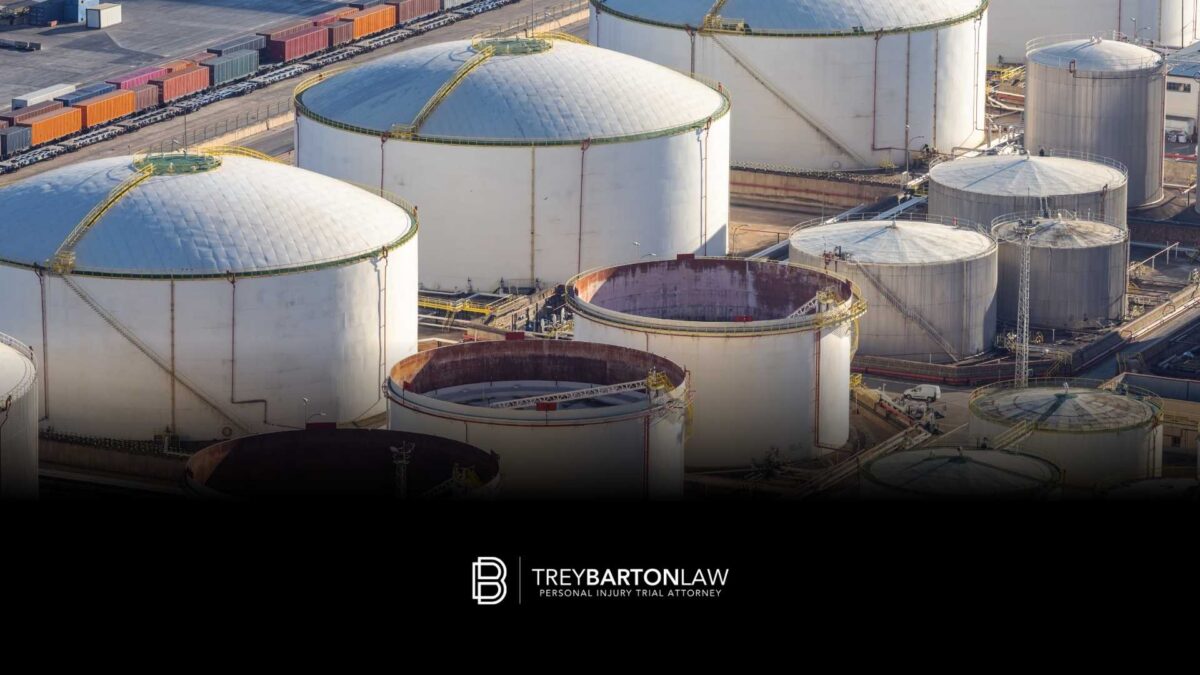
The vast majority of storage tank catastrophes are concentrated along the Houston Ship Channel, the Gulf Coast, and the Permian Basin.
Storage Tank Explosions, BLEVEs & Vapor Cloud Ignition
Most catastrophic tank events begin when flammable liquid or vapor finds an ignition source. This can detonate as a vapor-cloud explosion (VCE) or a boiling-liquid expanding-vapor explosion (BLEVE), hurling shrapnel and fire. OSHA’s flammable liquids standard governs storage and handling and is central to most explosion claims.
Floating-Roof Tank Fires & Lightning Strikes
Lightning strikes easily ignite rim vapors into a seal fire that grows. Poor seal maintenance, drainage failures, and missing lightning protection turn a routine storm into a major tank fire that traps and burns nearby workers.
Confined-Space & Tank Entry Deaths
Repairing, inspecting, and cleaning tanks require permits due to the hazardous chemicals and the risk of asphyxiation. With confined-space and trench collapse accidents in Texas, when a worker dies, it’s often because the company violated OSHA’s confined-space standard.
Tank Overfill & Catastrophic Release Incidents
Overfilling is the most preventable and destructive tank failure. Many of the worst tank-farm disasters trace directly to a missed alarm and the company’s failure to follow safe-filling procedures.
Hot Work, Turnaround & Tank Maintenance Accidents
Welding, cutting, and grinding are common causes of turnaround and maintenance accidents in Texas because sparks can enter environments with residual vapor. Without proper gas testing, line isolation, and fire watch, hot work ignites and causes massive tank explosions and severe burns. OSHA’s welding, cutting, and brazing standard requires safeguards that are routinely circumvented under turnaround-schedule pressure.
Toxic Vapor & Chemical Exposure (Benzene, H₂S, VOCs, Ammonia)
Storage tanks can emit and release benzene, hydrogen sulfide (H₂S), volatile organic compounds, and ammonia. When workers gauging, sampling, or repairing tanks are exposed, this gives rise to toxic chemical exposure claims in Texas.
Falls From Tank Roofs, Stairs & Access Platforms
Workers must climb to gauge, sample, and maintain tall storage tanks. The most common causes of falls across all industries are failure to follow occupational safety regulations. Another leading contributor is unsafe access design. On floating-roof tanks, workers also fall into the tank or onto the roof when access and anchorage are inadequate.
Common Types of Storage Tank Accidents Our Law Firm Handles
Aboveground Storage Tank (AST) Accidents
Aboveground storage tanks (ASTs) typically fail through shell and floor corrosion, roof and seal defects, overfilling, and ignition of escaping vapor. This often grows into pool fires or full-surface blazes. The EPA’s SPCC rule governs how ASTs must be designed, contained, and maintained, and violations frequently point straight to the operator’s negligence after a release or explosion.
Underground Storage Tank (UST) Explosions & Leaks
Underground storage tank (UST) accidents often involve migrating vapors and corrosion-induced leaks that contaminate soil and water, exposing workers and residents. Additionally, hot work near an UST can ignite trapped fumes. The EPA’s UST program sets the corrosion-protection, leak-detection, and spill-prevention standards companies must follow. In many cases we investigate, these standards are completely ignored.
Texas Propane Tank Accidents, LPG Explosions, & Pressurized Tank Incidents (Spheres & Bullets)
Propane and LPG are stored in spheres (“Horton spheres”) and horizontal bullet tanks. Pressurized releases either flash into vapor clouds or escalate into boiling-liquid expanding-vapor explosions (BLEVEs). The resulting damages are among the most deadly events in the industry. OSHA’s liquefied petroleum gas standard governs LPG storage and handling, and noncompliance is a recurring cause of catastrophic tank failures.
Cryogenic Storage Tank & LNG Tank Accidents
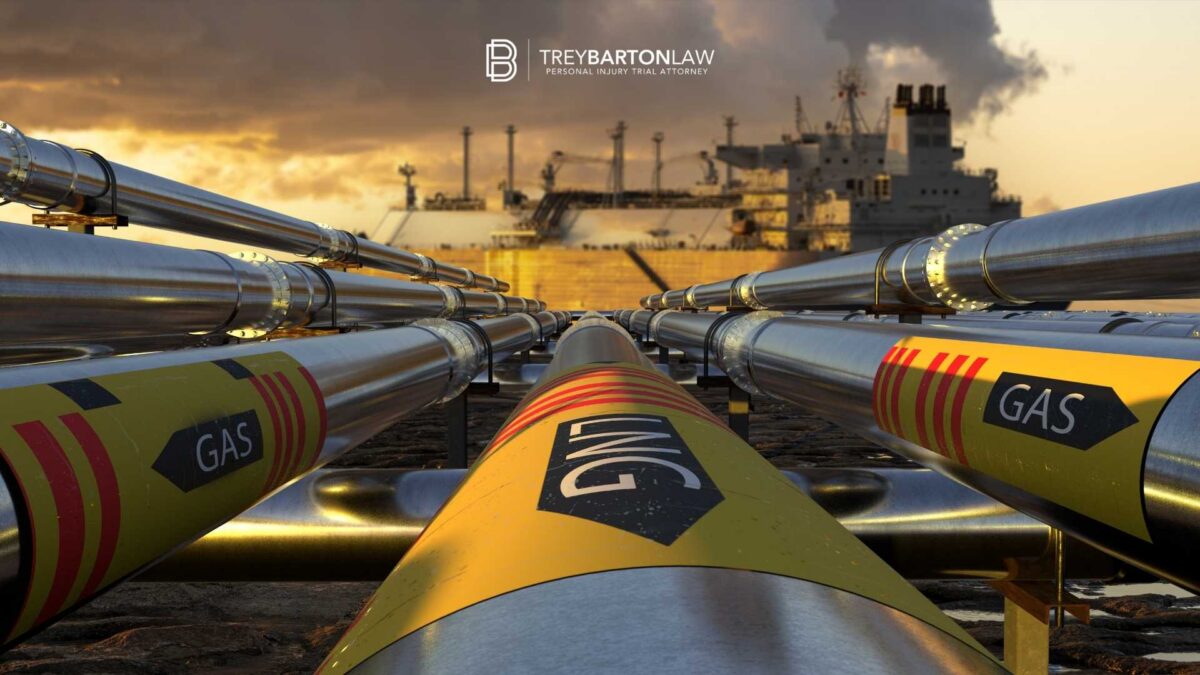
Storing liquefied natural gas (LNG) and other cryogenic products creates risks that other storage tanks don’t. The 2022 Freeport LNG explosion underscored how fast a failure becomes catastrophic. LNG facilities must meet PHMSA’s LNG safety standards. Breakdowns leave workers exposed to fatal cold-burn and explosion injuries.
Crude Oil, Chemical & Bulk Liquid Storage Tank Accidents
Each product carries its own danger, from flammables to toxic intermediates that injure on contact or inhalation. Tank failures release these liquids in spills, fires, and vapor clouds, and cleanup or gauging work puts crews in direct contact. Our Texas storage tank injury attorneys represent clients in every class of stored liquid, from low-flash hydrocarbons to highly reactive industrial chemicals.
Oilfield Tank Batteries & Frac Tanks
Oilfield tank batteries and portable frac tanks are often cited in Texas fracking accident claims. Open hatches, accumulated vapors, and static-charge ignition make them a leading source of flash fires and explosions for gaugers and field hands. We also pursue claims for oilfield tank battery fires in Texas, where thief-hatch gauging and vapor exposure repeatedly prove deadly.
Grain Silos & Dry Bulk Storage (Combustible Dust)
Grain silos, elevators, and dry-bulk storage facilities hold corn, feed, flour, sugar, and other materials that can generate combustible dust. Primary dust explosions often set off secondary blasts, while grain engulfment is nearly impossible to escape. OSHA’s grain handling standard requires dust control, lockout, and entry permits, protections whose failure causes the explosions and engulfment fatalities our Texas tank farm accident lawyers litigate.
Representing Injured Workers From All Industries & Facilities Across Texas
Oil Refinery Tank Farm Accidents
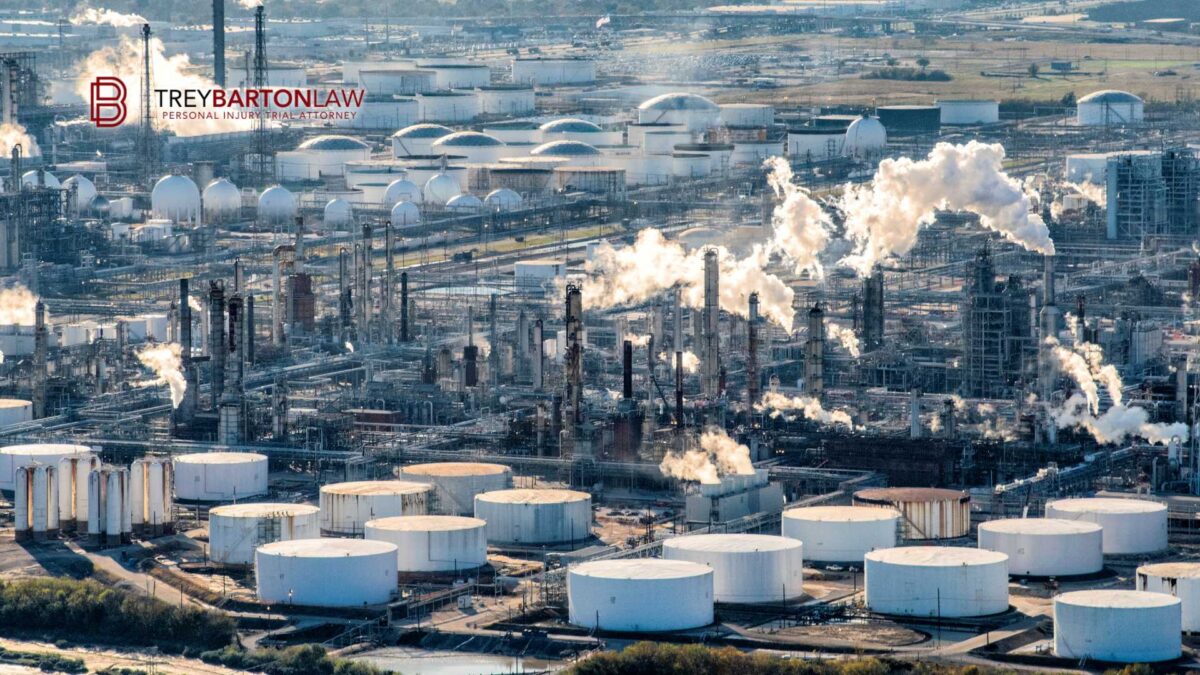
Texas refineries operate sprawling tank farms that store crude feedstock and finished fuels, where overfills, corroded shells, and vapor ignition routinely lead to pool fires and explosions. Refinery storage areas combine high-volume flammables with constant maintenance and turnaround traffic, exposing crews to blast and burn injuries. Our combined experience with storage incidents often parallels the Texas refinery fires and explosions we handle across the Gulf Coast.
Petrochemical Plant Storage Tank & Chemical Manufacturing Accidents
Petrochemical and chemical manufacturing plants store reactive feedstocks, intermediates, and finished products in tanks that can leak, overpressurize, or ignite. A storage-tank incident can release toxic or flammable material across the unit, injuring workers far from the source. Many petrochemical accident claims overlap with the Texas chemical plant explosions and other accidents we litigate throughout the Gulf Coast corridor.
Natural Gas Processing & NGL Storage Accidents
Gas processing plants and NGL storage hubs separate, fractionate, and store ethane, propane, butane, and natural gasoline under pressure. Leaks form invisible, heavier-than-air vapor clouds that travel and ignite, producing flash fires and explosions. Mont Belvieu and other Texas fractionation centers concentrate enormous volumes of pressurized NGLs, putting plant and contract workers at constant risk.
LNG Export Terminal Accidents
Texas anchors much of the nation’s LNG export capacity. These terminals liquefy, store, and load natural gas, combining cryogenic burn, asphyxiation, and vapor cloud explosion hazards. Construction crews, operators, and marine-loading workers face serious injury when containment, transfer, or relief systems fail during liquefaction and ship loading.
Propane & LPG Bulk Plant Accidents
Propane and LPG bulk plants store and distribute pressurized fuel gas to homes, farms, and businesses across the state. Transfer-hose failures, overfilled tanks, relief-valve malfunctions, and ignition of escaping gas cause flash fires and explosions that kill plant workers and delivery drivers. Our Texas storage facility accident attorneys often handle cases in rural towns more prone to aging equipment and deferred maintenance.
Fuel, Gas & Diesel Terminal Accidents
Fuel terminals and rack-loading facilities store and dispense gasoline, diesel, and jet fuel into tankers and pipelines. Static ignition during loading, overfills, vapor buildup, and equipment malfunctions expose loaders, drivers, and terminal staff to fire and explosion. High-traffic Houston-area product terminals experience constant transfer activity, which magnifies this risk.
Bulk Liquid Storage Terminal Accidents (Third-Party Logistics)
Third-party logistics terminals operated by companies such as ITC, Vopak, Kinder Morgan, and Magellan/ONEOK store and transfer petrochemicals and fuels for outside customers. The 2019 ITC Deer Park tank farm fire, which blanketed the Houston area in smoke, showed how failures in tank design, foam systems, and containment endanger entire communities.
Pipeline & Midstream Storage Facility Accidents
Pipeline pump stations, breakout tanks, and midstream storage facilities move and hold crude and products between fields, plants, and terminals. Tank and equipment failures at these sites release high-pressure hydrocarbons that ignite or expose workers to toxic vapor. These incidents frequently connect to the Texas pipeline explosions we assist with across the state’s oil-and-gas industry.
Power Plant Fuel Storage Accidents
Power plants store fuel oil, natural gas, and bulk chemicals. Fuel-oil tank fires, gas releases, and chemical-storage failures injure workers, particularly during outages and startups. Texas’s grid demands keep these facilities running hard, raising the stakes when storage equipment fails.
Agricultural & Fertilizer Storage Accidents (Anhydrous Ammonia)
An ammonia release at a farm, co-op, or fertilizer storage facility can cause severe chemical burns, blindness, and fatal respiratory injury within moments, and ammonium nitrate storage carries explosion risk, as the West, Texas disaster made tragically clear. OSHA sets occupational safety regulations for handling anhydrous ammonia. When these safety protocols are ignored, it leads to fatal exposures.
Water & Wastewater Treatment Chemical Storage Accidents
Municipal and industrial water and wastewater plants store chlorine, ammonia, and other treatment chemicals in bulk tanks. Leaks and releases of chlorine gas or ammonia injure nearby workers through chemical burns and inhalation injury. Confined storage and treatment areas can trap escaping gas, turning a small leak into a life-threatening exposure.
Food & Beverage Processing Storage Accidents (Ammonia Refrigeration)
Food and beverage plants, cold-storage warehouses, and meatpacking facilities rely on large anhydrous-ammonia refrigeration systems. When ammonia is released into work areas, this causes severe chemical burns, respiratory damage, and death.
Marine & Port Storage Terminal Accidents
Marine and port storage terminals along the Houston Ship Channel, Galveston Bay, and the Gulf Coast load and store fuels and chemicals between ship, barge, and shore tanks. Maritime workers hurt at these facilities may have additional remedies, including Jones Act and maritime claims beyond standard personal injury lawsuits.
Texas Tanker Truck Accidents
Tanker trucks haul crude, fuel, LPG, and hazardous chemicals between Texas tank farms, terminals, and end users. In Texas, tanker truck accidents often include rollovers, loading and offloading mishaps, valve failures, and collisions that can rupture a tanker and trigger fires, spills, and toxic releases. We help drivers and others injured in Texas tanker truck accidents involving hazardous and flammable cargo. This is a complex legal process that requires extensive experience.
Locations Our Texas Storage Tank Accident Lawyers Serve
Houston Ship Channel Tank Farms & Terminals
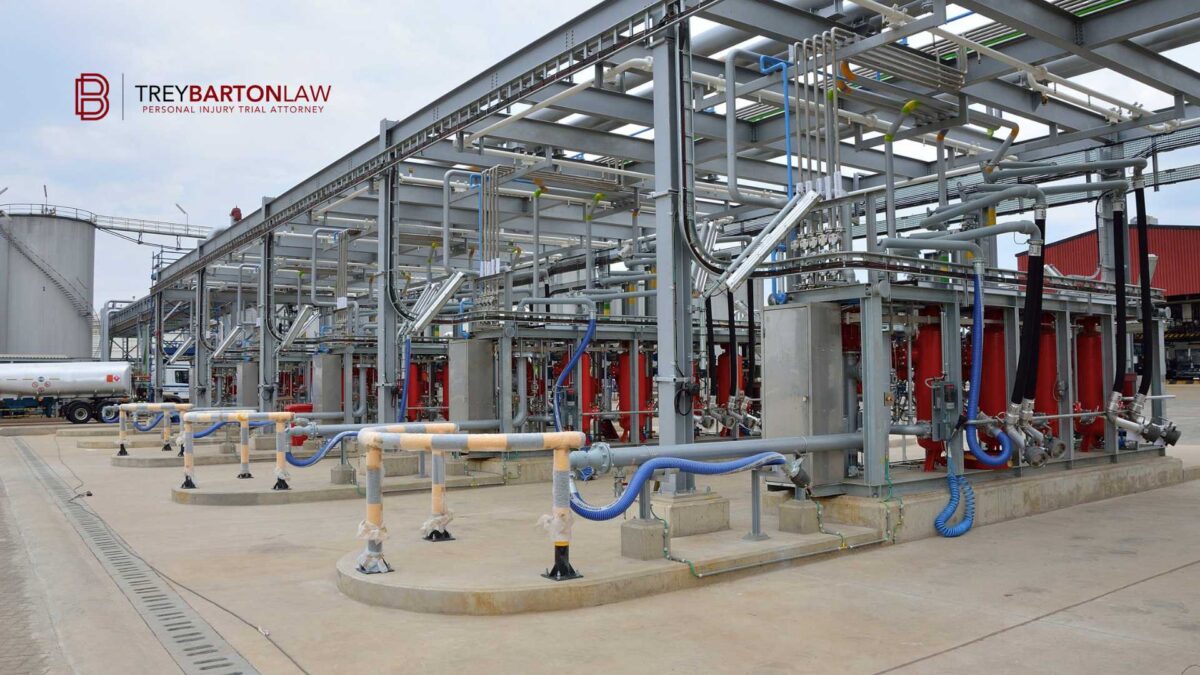
The Houston Ship Channel holds the country’s densest cluster of storage terminals, operated by companies like Kinder Morgan, Vopak, Buckeye, and NuStar and worked daily by operators, gaugers, and contract crews. It’s a corridor with a long history of terminal fires and toxic releases. If you’ve been injured at a Ship Channel tank farm, our law firm investigates immediately and pursues the operator, contractors, and manufacturers responsible.
Deer Park, Pasadena & La Porte Storage Terminals
Deer Park, Pasadena, and La Porte are packed with active sites: the Pemex Deer Park refinery, Shell’s Deer Park chemical plant, Chevron’s Pasadena refinery, the ITC terminal, known for the 2019 ITC tank farm fire that burned for days, and chemical plants such as Lubrizol and OxyVinyls. If you’ve been hurt or lost a loved one, a Texas storage terminal injury attorney from our legal team can help.
Mont Belvieu NGL Storage & Fractionation Hub
Mont Belvieu is the nation’s NGL storage and fractionation hub, where Energy Transfer, Targa, ONEOK, and Enterprise Products, known for the 2011 storage facility explosion, store propane, ethane, and butane in salt-dome caverns and surface tanks. Our Texas storage tank accident attorneys help plant and contract workers hurt in pressurized-release fires seek maximum compensation.
Texas City & Galveston Bay Tank Farms
Texas City runs on Marathon’s Galveston Bay Refinery, Valero Texas City refinery, and INEOS and Eastman chemical plants. The area still carries the legacy of the 2005 BP Texas City explosion. If you’re injured in a fire, release, or explosion at these tank farms, we pursue compensation from the refiner and contractors for you.
Beaumont & Port Arthur Storage Facilities
Beaumont and Port Arthur are anchored by Motiva’s Port Arthur refinery, ExxonMobil’s Beaumont refinery, Valero, and TotalEnergies, plus the TPC Group plant whose 2019 butadiene explosion shook the region. We represent operators, contractors, and turnaround workers injured at these refineries, terminals, and tank farms across the Golden Triangle.
Permian Basin & Eagle Ford Crude Tank Batteries
Companies like ExxonMobil, Chevron, Occidental, Diamondback, and ConocoPhillips run thousands of crude tank batteries and frac tanks that have injured oil and gas workers in Midland and Odessa and across the Eagle Ford. Investigations have tied repeated worker deaths to hydrocarbon vapor at open tank hatches during gauging. We represent gaugers, pumpers, and field hands hurt in tank-battery flash fires today.
Common Injuries Suffered by Texas Storage Tank Workers
Our legal team has extensive experience representing victims who suffer serious injuries. The following are the most common injuries we see:
- Third-degree burns (thermal, chemical, and cryogenic)
- Crush trauma
- Amputations
- Toxic exposure and lung damage
- Traumatic brain injuries, including brain injuries from temporary oxygen deprivation
- Spinal cord injuries
- Serious fractures
- Paralysis
- Fatal injuries
Determining Liability in Texas Tank Farm and Terminal Accidents
Tank farm and terminal injury cases typically have multiple defendants. Because most operations involve multilayered companies, injured workers often have third-party claims that extend well beyond the limits of workers’ compensation. Our Texas terminal accident attorneys understand that identifying every responsible party is what separates a modest comp claim from a full recovery. Potential defendants include:
- Terminal owners, property owners, storage operators
- Tank cleaning, maintenance, and contracted crews
- Manufacturers whose defective products fail under Texas product liability law
- Chemical suppliers and distributors
- Employers (non-subscribers and wrongful death)
OSHA’s multi-employer citation policy helps establish which companies controlled or created a hazard, strengthening third-party claims. To secure maximum compensation, we take legal action against terminal and property owners, service companies, suppliers, and manufacturers, as these are among the most catastrophic defective-equipment and heavy-equipment accidents in Texas.
Federal & Industry Safety Standards for Texas Storage Tanks
In many cases, our Texas storage tank injury lawyers can use the following violations to prove negligence:
- OSHA Process Safety Management (PSM): hazardous chemicals
- EPA Risk Management Program (RMP): prevention planning for hazardous substances
- NFPA 30 and NFPA 58: tank storage, spacing, and handling requirements
- API 653, API 2350, & API 2015: standards for inspecting, filling, and entering tanks
Financial Compensation for Texas Storage Tank Accident Victims
Third-party lawsuits recover far more than workers’ compensation benefits. There’s no cap on damages in these civil lawsuits. In addition, gross negligence can support punitive damages.
Our Texas storage tank injury lawyers can help recover damages, such as:
- Economic damages: medical bills, cost of ongoing medical care and future medical treatment, lost income, future earning capacity, and more
- Non-economic damages: physical pain and suffering, disfigurement, emotional distress, permanent impairment, and more
- Punitive damages where the conduct rises to gross negligence
Texas law bars suing subscribing employers. Personal injury lawsuits against contractors, operators, and manufacturers aren’t subject to damage caps. Courts apply proportionate responsibility to allocate fault among defendants.
Contact a Texas tank farm accident attorney to discuss potential legal strategies.
Wrongful Death Cases: When Texas Storage Tanks Cause Fatal Injuries
Workers’ compensation benefits provide minimal resources for family members.
However, families often have third-party wrongful death cases against operators, contractors, manufacturers, or other parties. Even if an employer carries insurance, if gross negligence contributed, families can sue them directly via wrongful death claims in Texas.
These cases demand fast evidence preservation because tanks are returned to service quickly after a fatality. Our Texas storage tank accident attorneys move immediately to secure the scene evidence and records families need to seek justice and recover damages.
Why Injured Tank Farm Workers Across Texas Choose Trey Barton Law
When a worker suffers serious injuries or dies, companies and their insurers start building a defense within hours. Victims also need a law firm ready to protect their legal rights immediately.
Our legal team brings a trial-ready posture to every tank farm and terminal case, investigating fast, hiring the right engineering and safety experts, and pursuing all at-fault parties, not just the easy target.
We represent workers injured throughout the Houston Ship Channel, the Gulf Coast, and Central and East Texas, and we handle these cases on a contingency-fee basis.
Clients pay nothing unless we win. Call 832-916-2526 for a free consultation.
Practice Areas
Serving These Cities & Counties in Texas
Free Consultation
Our experienced Houston personal injury attorneys want to get to know you and understand your unique situation. We offer a free, no-obligation consultation. You don’t pay unless your case is won.
Awards & Recognition






No Fee Unless You Win
Trey Barton understands the hardships injured people and their loved ones face as they try to heal from their accident. Every case is prepared as if it is going to trial. This gives you the best opportunity to obtain a fair recovery for your case, and ensures I am positioned to take the case to trial if the insurance company does not give you the money you deserve.