
Texas Jones Act Lawyer
A Texas Jones Act injury lawyer helps seamen injured on vessels in Texas waters or offshore in the Gulf of Mexico recover damages from negligent employers under 46 U.S.C. § 30104. Qualifying crew members can also claim maintenance and cure and unseaworthiness damages, but they must file claims within three years of the injury.
Serving Injured Seamen Across Texas:
- Houston
- Galveston
- Corpus Christi
- Beaumont
- Port Arthur
- Texas City
- Freeport
- Sugar Land
- Brownsville
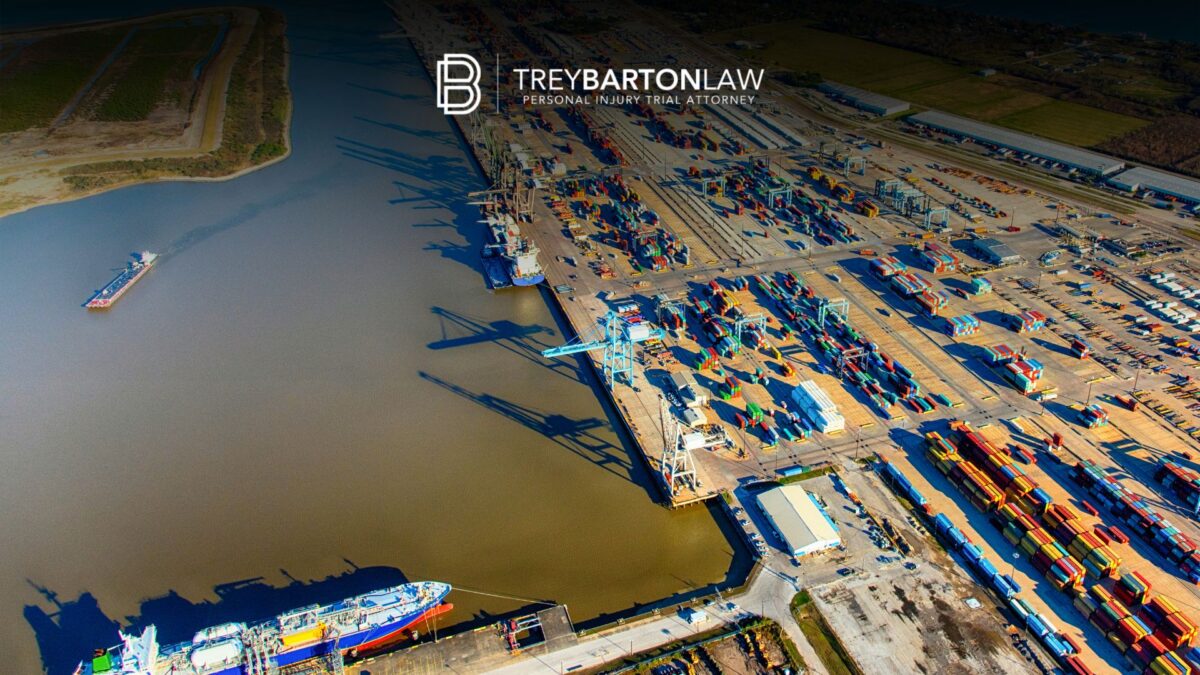
Why Injured Maritime Workers in Texas Choose Trey Barton Law
Trey Barton Law focuses on industrial and offshore injury cases, with over $70 million recovered for injured Texas workers since 2020. Our Texas Jones Act injury lawyer team serves every port on the coast and knows how vessel operators, drilling contractors, and their insurers handle crew injury claims.
Maritime employers and their protection and indemnity insurers start building defenses immediately. Led by Sugar Land trial lawyer Trey Barton, our Texas maritime injury lawyers move just as fast, preserving evidence and handling claims under the Jones Act statewide on contingency. You don’t pay unless we win.
in Settlements & Verdicts Since 2020
Over $70 Million in Settlements and Verdicts Since 2020What the Jones Act Covers for Injured Seamen in Texas
The Jones Act, also known as the Merchant Marine Act of 1920, codified at 46 U.S.C. § 30104, allows injured seamen to sue employers for negligence and have a jury decide the entire case. The Merchant Marine Act/Jones Act establishes important legal rights because injured seamen generally are excluded from state workers’ compensation benefits and the Longshore and Harbor Workers’ Compensation Act (LHWCA) under federal law.
The Merchant Marine Act of 1920 borrows rules from FELA, bringing a “featherweight” causation standard. The Jones Act works in employees’ favor because they only need to prove employer negligence contributed, even in the slightest, to the personal injuries sustained on the job. Like standard personal injury claims, the victim’s responsibility reduces recovery under pure comparative negligence (45 U.S.C. § 53), but it doesn’t bar it.
Employers also can’t argue that injured seamen assumed the risk of a dangerous job (45 U.S.C. § 54). Under Gautreaux v. Scurlock Marine, seamen are held to ordinary prudence, not a heightened duty. A 2022 amendment carved out certain aquaculture workers, but it rarely affects employees working in the Gulf of Mexico.
Jobs Often Covered by the Jones Act
Tugs, Towboats & Barges
Houston Ship Channel and Intracoastal Waterway crews
- Deckhands
- Tankermen
- Mates
- Captains & Pilots
- Engineers
Offshore Vessels & Rigs
OSVs, liftboats, crew boats, drillships, and jack-ups
- OSV Crew
- Liftboat Crew
- Crew Boat Crew
- Drillship Crew
- Crane Operators
- Roustabouts*
- Roughnecks*
*Rig crew coverage depends on the type of rig and how much of your work is done aboard it.
Ship & Tanker Crews
Licensed and unlicensed crew aboard working vessels
- Able Seamen (ABs)
- QMEDs
- Oilers
- Cooks & Stewards
- Ordinary Seamen
Dredges & Fishing Boats
Channel dredging and Gulf shrimp and fishing fleets
- Dredge Levermen
- Dredge Deckhands
- Shrimp Boat Crew
- Commercial Fishermen
Other Maritime Jobs, Other Claims
Not a seaman? You may still have a strong case.
- Longshore Workers & StevedoresLHWCA
- Dock & Terminal WorkersLHWCA
- Shipyard & Ship Repair WorkersLHWCA
- Fixed Platform WorkersOCSLA
Your job title alone does not decide your claim. Seaman status depends on your duties and time aboard a vessel.
Workers Covered By the Jones Act
Not every employee working at sea is a Jones Act seaman. Courts apply the Supreme Court’s seaman-status test in Chandris v. Latsis, which has two parts:
- You must contribute to a vessel’s function or mission.
- Your connection to that vessel must be substantial in both duration and nature.
As a general rule, you need to spend a significant amount of time on a vessel in navigation, at least 30%.
Stewart v. Dutra Construction confirmed that dredges count. The ruling in Sanchez v. Smart Fabricators of Texas tightened the Jones Act seaman status for workers on jack-up rigs.
Common examples of Jones Act seamen include deckhands, tankermen, able-bodied seamen (ABs), QMEDs, mates, captains, cooks, dredge levermen, and liftboat crews. If you’re working at sea, you likely qualify if these factors apply:
- You contribute to the function or mission of a vessel in navigation or an identifiable fleet of vessels
- You spend 30% or more of your work time aboard a vessel in navigation, and your connection is substantial in nature (exposure to perils of the sea)
- The vessel is “in navigation”: tugs, towboats, barges, OSVs, crew boats, dredges, jack-up rigs, drillships, fishing boats
- Your employer is the vessel operator or a company that assigns you to vessel work
- You were injured in the course of employment, on or off the vessel
Free Eligibility Check
Seaman Status & Deadline Quick-Check
See which law likely covers your injury & when your claim must be filed.
Likely Framework
Filing Deadline
General information only, not legal advice.
Determining If You File a Negligence, LHWCA, Or Jones Act Claim in Texas
Dock, terminal, and fixed-platform workers usually don’t qualify as Jones Act seamen. Longshoremen, harbor workers, and ship repairers typically receive no-fault benefits under the Longshore and Harbor Workers’ Compensation Act. Employees on fixed Outer Continental Shelf platforms are covered through the Outer Continental Shelf Lands Act (OCSLA), which extends LHWCA benefits to those injured while working offshore.
LHWCA coverage does not end legal options. If unsafe conditions aboard vessels caused a personal injury, you can still sue the owner under 33 U.S.C. § 905(b). Shore-side workers outside both systems may be able to file for workers’ compensation benefits or seek compensation through a standard personal injury claim.
Jones Act
46 U.S.C. § 30104
Who It Covers
Seamen who spend about 30% or more of their work time aboard a vessel in navigation
Fault Required?
YesEmployer negligence must play any part, even the slightest
Benefits / Damages
Lost wages and earning capacity, medical care, pain and suffering, and mental anguish
Filing Deadline
3 years
From the date of injury
General Maritime Law
Unseaworthiness, maintenance and cure
Who It Covers
Seamen injured in service of a vessel; claims run against the vessel owner and employer
Fault Required?
NoAn unfit vessel or a service-related injury is enough
Benefits / Damages
Full damages for unseaworthiness; daily living costs, medical care to maximum medical improvement, and unearned wages
Filing Deadline
3 years
Maintenance and cure governed by laches
LHWCA
Longshore and Harbor Workers' Compensation Act
Who It Covers
Longshore, dock, terminal, and shipyard workers on or near navigable waters
Fault Required?
VariesNo for benefits; yes for a vessel owner negligence claim under § 905(b)
Benefits / Damages
Two-thirds of average weekly wages (subject to a cap) and medical care, plus a separate suit against a negligent vessel owner
Filing Deadline
1 year
30-day notice to employer
OCSLA
Via LHWCA
Who It Covers
Fixed-platform and other offshore oil and gas workers on the Outer Continental Shelf
Fault Required?
VariesNo for benefits; yes for third-party claims
Benefits / Damages
LHWCA wage and medical benefits, plus third-party negligence claims under adjacent state law
Filing Deadline
1 year
2 years for Texas-law third-party claims
Texas Workers' Comp / Texas Negligence
State law
Who It Covers
Land-based workers not covered by federal maritime law
Fault Required?
VariesNo for comp benefits; yes for suits against nonsubscribers or third parties
Benefits / Damages
Comp pays income and medical benefits; a negligence suit seeks full damages, including pain and suffering
Filing Deadline
2 years
To sue; comp requires 30-day notice and a 1-year claim
The Three Core Claims Under The Jones Act & What The Jones Act Requires
Injured seamen generally can bring three claims under the Jones Act together in one lawsuit:
- Employer negligence
- Unseaworthiness for unsafe conditions aboard vessels
- Maintenance and cure
Each has different evidence requirements, and filing claims together protects a Jones Act seaman’s recovery if one faces a strong defense. Our Texas Jones Act attorneys evaluate all three.
Claim 01
Jones Act Negligence
Holds your employer responsible for unsafe orders, poor training, short crews, and defective equipment.
Who pays
Your employer
Fault needed?
Yes Even the slightest part in causing your injury
Claim 02
Unseaworthiness
Covers vessels that are not reasonably fit for their use, such as slick decks, worn lines, or missing guards.
Who pays
The vessel owner, who may not be your employer
Fault needed?
No The owner's duty is absolute
Claim 03
Maintenance and Cure
Daily living expenses, medical care until maximum medical improvement, and unearned wages for the hitch.
Who pays
Your employer
Fault needed?
No Owed regardless of who caused the injury
Jones Act Claim For Employer Negligence
Common examples of employer negligence in offshore injury cases include: inadequate crew size, inadequate training, unsafe orders to work in heavy weather, faulty equipment or failure to maintain equipment, fatigue from excessive hitches, and unsafe working conditions. For success in claims under the Jones Act, the employer’s failure only needs to contribute to your injury.
Unseaworthiness Claims Under General Maritime Law
Vessel owners have a legal duty to provide a vessel reasonably fit for its intended use, as held in Mitchell v. Trawler Racer. Injured maritime workers don’t need to prove intent or negligence. Unsafe conditions aboard vessels can include slick decks, worn mooring lines, missing guards, and an undermanned team, which can all make a vessel unseaworthy. The owner may differ from your employer.
Maintenance and Cure Benefits
- Maintenance: daily stipend for living expenses while you recover
- Cure: covers medical costs until you reach maximum medical improvement, and lost wages run through the end of your voyage or hitch.
These are owed to injured workers regardless of fault. Employers often offer rates that are too low to cover actual living costs. Our Texas maritime injury lawyers can challenge those rates. If an employer refuses to pay or cuts off benefits in bad faith, under Atlantic Sounding Co. v. Townsend, maritime workers can seek punitive damages and attorney’s fees on top of the unpaid compensation.
Common Gulf Of Mexico Maritime Accidents
Every Texas Jones Act injury lawyer on our legal team handles crew injuries along the 423-mile Texas stretch of the Gulf Intracoastal Waterway (TxDOT Maritime Division) and offshore workers injured in the Gulf of Mexico. The following types of maritime accidents drive most of the Texas offshore injury claims handled, but the list isn’t exhaustive.
Tugboat & Barge Accidents on the Houston Ship Channel & Intracoastal Waterway
Towboat and tug crews face line-handling injuries, parted-line snap-back, barge strikes, falls between barges during make-up and break-up of tows, and man-overboard events. Our maritime lawyers trace crush injuries from parted lines and shifting barges back to their root causes: staff shortages, worn rigging, and rushed orders.
Offshore Supply Vessel, Liftboat, & Drilling Rig Injuries in the Gulf of Mexico
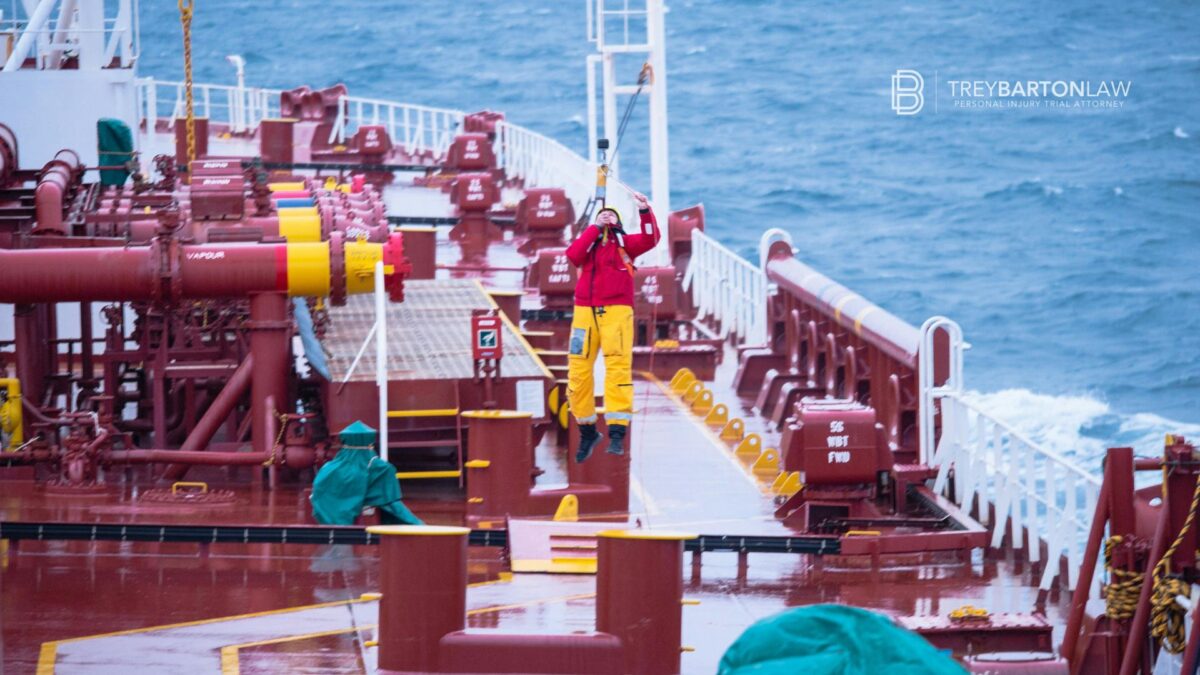
Personnel transfers from offshore supply vessels and crew boats by swing rope or personnel basket cause serious falls in Gulf swells. Our Jones Act attorneys also handle mobile offshore drilling unit accidents, liftboat capsizes, drillship injuries, and offshore oil rig explosion cases. After Sanchez, offshore workers on jack-up rigs need a free case review to determine if they qualify for the Jones Act seaman status.
Dredge & Crew Boat Injuries Along the Texas Coast
Channel-deepening projects at Houston, Corpus Christi, and the Sabine-Neches Waterway put dredge crews near pressurized pipelines and cutterheads, while crew boats suffer collisions and hard landings in rough seas. Many of these Jones Act cases involve heavy deck equipment and crane injuries, from winch failures to dropped loads and crane collapses that strike or crush deckhands.
Commercial Fishing & Shrimp Boat Injuries in Galveston, Port Arthur, & Brownsville
Gulf shrimp fleets out of Galveston, Port Arthur, and Brownsville run long trips with small crews. Deckhands suffer winch and net entanglement, trawl door and outrigger injuries, and falls overboard; generally speaking, many maritime accidents happen because of round-the-clock fatigue.
Fishing crew members are usually Jones Act seamen covered by all the important protections listed above.
Vessel Fires, Explosions, & Toxic Exposure in Texas Ports
Engine room fires and tank barge explosions during loading at refinery and petrochemical docks cause severe burns and blast injuries, while tankermen face H2S and benzene exposure during cargo transfers. Our Jones Act lawyer team handles fire and explosion injury claims in Texas, toxic chemical exposure claims, and offshore worker injuries sustained in LNG terminal accidents.
Serious Injuries & Maritime Wrongful Death Claims
Maritime work remains one of the most dangerous jobs in the country. BLS water transportation injury data shows 11 deaths and 3.1 recordable injuries per 100 full-time workers in 2024, and towing vessel crews died at 5.4 per 100,000 workers that year (USCG-AWO), well above the 3.3 rate for all U.S. workers.
Traumatic brain injuries, spinal cord damage, amputation and crush injuries, and severe burns often end a career at sea. Because cure stops at maximum medical improvement, lifetime care and lost earning capacity must be recovered through Jones Act negligence and unseaworthiness claims. We work with life-care planners and economists to prove those losses.
When a seaman is killed, the personal representative files for the surviving spouse and children, or the parents if there are none. The Death on the High Seas Act (46 U.S.C. § 30302) governs deaths beyond 3 nautical miles, and Miles v. Apex Marine limits recovery to financial losses like lost support and funeral costs.
Unlike Texas wrongful death claims, federal maritime law does not compensate a family’s grief or lost companionship. We determine which law applies, help the family get a personal representative appointed, and investigate the death independently instead of relying on the employer’s report.
Towing Crew Deaths
5.4 per 100,000 workers
Fatality rate for towing vessel crews in 2024, about 1.6x the rate for all U.S. workers (3.3).
Nonfatal Injuries
3.1 per 100 full-time workers
Recordable injury rate in water transportation in 2024. Nearly two-thirds led to days away from work, job restrictions, or a transfer.
Damages Available in a Texas Jones Act Claim
Your recovery depends on which claims apply, how fault is allocated, and how long your injury keeps you off the job. A Texas Jones Act injury attorney pursues every available claim. Injured employees working offshore can recover damages, such as:
- Lost income and future earning capacity
- Medical costs and future medical expenses for medical treatment, surgery, and rehabilitation
- Maintenance, cure, and unearned income
- Non-economic damages: physical pain and suffering, mental anguish, scarring and disfigurement, physical impairment, loss of enjoyment of life, etc.
- Punitive damages and attorney’s fees in specific circumstances
- Wrongful death: lost support, services, and funeral costs
Punitive damages aren’t a part of Jones Act compensation for cases involving negligence under McBride v. Estis Well Service, or for unsafe working conditions aboard a vessel under Dutra Group v. Batterton. However, a Jones Act attorney can seek them when an employer willfully fails to pay maintenance and cure.
Damage Type
Lost Wages / Earning Capacity
Income lost while you recover and your ability to earn in the future.
Jones Act Negligence
Employer fault required
CoveredPast and future wages plus lost earning capacity.
Unseaworthiness
No negligence required
CoveredThe same wage and earning-capacity recovery as negligence.
Maintenance and Cure
No fault required
LimitedUnearned wages only, through the end of the voyage or hitch.
Damage Type
Medical Expenses
Treatment, surgery, therapy, and future care for your injury.
Jones Act Negligence
Employer fault required
CoveredPast and future medical costs tied to the injury.
Unseaworthiness
No negligence required
CoveredPast and future medical costs tied to the injury.
Maintenance and Cure
No fault required
CoveredCure pays for care until maximum medical improvement.
Damage Type
Pain and Suffering
Physical pain, mental anguish, and lasting impairment.
Jones Act Negligence
Employer fault required
CoveredFull recovery for pain, anguish, and impairment.
Unseaworthiness
No negligence required
CoveredAvailable when an unfit vessel caused the injury.
Maintenance and Cure
No fault required
Not CoveredThese benefits cover living costs and medical care only.
Damage Type
Living Expenses (Maintenance)
Daily costs like rent, utilities, and food while you recover.
Jones Act Negligence
Employer fault required
Not CoveredNot a separate item: paid through maintenance instead.
Unseaworthiness
No negligence required
Not CoveredNot a separate item: paid through maintenance instead.
Maintenance and Cure
No fault required
CoveredA daily stipend paid until maximum medical improvement.
Damage Type
Unearned Wages
Pay you would have earned for the rest of the voyage or hitch.
Jones Act Negligence
Employer fault required
Not CoveredWage loss is recovered as lost wages instead.
Unseaworthiness
No negligence required
Not CoveredWage loss is recovered as lost wages instead.
Maintenance and Cure
No fault required
CoveredOwed through the end of the voyage or hitch, regardless of fault.
Damage Type
Punitive Damages
Added damages that punish serious misconduct.
Jones Act Negligence
Employer fault required
Not CoveredNot available for Jones Act negligence claims.
Unseaworthiness
No negligence required
Not CoveredNot available for unseaworthiness claims.
Maintenance and Cure
No fault required
LimitedAvailable, with attorney's fees, when an employer willfully refuses to pay.
Statute of Limitations For Filing Claims Under The Jones Act
Claims under general maritime law and the Jones Act fall under the three-year maritime filing deadline. LHWCA claims require notice within 30 days and a claim within one year, and state negligence lawsuits carry a two-year limit.
If you were injured while working offshore, don’t wait to seek legal representation. Vessel logs, CCTV footage, and maintenance records can be overwritten or lost within weeks of an incident.
What to Do After a Maritime Injury in Texas
Your employer must file a USCG Report of Marine Casualty (Form CG-2692) for qualifying injuries:
- Requiring medical treatment beyond basic first aid
- If the person is engaged or employed on board a vessel in commercial service, the injury must render them unfit to perform their routine vessel duties
The steps you take after a maritime injury are just as important:
- Report the injury to the captain or supervisor in writing immediately
- Get medical care and keep every record; you can choose your own doctor for cure
- Don’t sign statements or give a recorded statement to the company or its insurer
- Don’t accept a quick settlement offer or low maintenance rate without consulting a maritime injury lawyer
- Call a Jones Act lawyer before returning to the vessel
0 of 5 collected
A spoliation letter must go out before the operator repairs the unit. Call 832-916-2526.
How Our Texas Jones Act Offshore Injury Lawyers Build Your Case
Under the savings-to-sovereign clause (28 U.S.C. § 1333(1)), a seaman can file in Texas state court or federal court. Jones Act suits filed in state court generally cannot be removed to federal court (28 U.S.C. § 1445(a), via FELA), so venue is a strategic choice you control.
Hiring a Texas Jones Act injury lawyer early gives your case its strongest start, and we’re there throughout the entire process. Every Texas Jones Act injury attorney on our maritime trial team follows the same legal process:
-
01
Free consultation and Jones Act seaman-status review
-
02
Immediate preservation letters for vessel logs, CCTV, and maintenance records
-
03
Investigate USCG casualty reports, hire marine safety experts, and conduct co-worker interviews
-
04
Workup for economic and non-economic damages
-
05
Demand, filing in the right court, and discovery
-
06
Mediation, settlement, or jury trial
Texas Jones Act Injury Lawyer Serving Ports & Waterways Across The Gulf of Mexico
Our Sugar Land office handles Jones Act claims from every Texas port and the offshore Gulf. Depending on where the maritime accident happened and who the defendants are, your case may be filed in the state district court or in a federal division. Below, our maritime lawyers cover each port’s courts and trauma centers.
Port of Houston
220.1M
Short tons of foreign cargo in 2024, ranks #1 in U.S. for foreign waterborne tonnage.
Source: TxDOT Port Houston
Port of Corpus Christi
203.4M
Tons of cargo moved through the port in 2025.
Source: Port of Corpus Christi
Gulf of Mexico Intracoastal Waterway
423miles
Of the Intracoastal Waterway run along the Texas coast.
Source: TxDOT Gulf Intracoastal Waterway
Harris County & Houston Jones Act Lawyer
Port Houston ranks first in the U.S. for foreign waterborne tonnage at 220.5 million short tons across more than 200 Ship Channel terminals. Our Houston Jones Act attorneys handle Houston Ship Channel accident claims at every one of those terminals.
Your Houston Jones Act lawyer can file in the U.S. District Court, Southern District of Texas, Houston Division, and Harris County civil district courts. Seriously injured crew members are treated at Memorial Hermann-Texas Medical Center and Ben Taub Hospital (both Level I) or HCA Houston Healthcare Southeast in Pasadena (Level III).
Fort Bend County & Sugar Land Jones Act Attorney
Our office at 3 Sugar Creek Center Blvd., Ste 675, serves offshore and inland crew members who live in Fort Bend and commute to Gulf hitches. As Fort Bend County injury lawyers, we file at the Fort Bend County Justice Center. Severe injuries transfer to Houston’s Level I centers.
Texas City, Freeport, & Galveston Jones Act Lawyer
The Port of Galveston, Texas City refinery docks, Port Freeport, and heavy GIWW tow traffic produce frequent maritime worker injuries. Federal cases go to the SDTX Galveston Division and state cases to the Galveston County Justice Center, while Freeport incidents may support Brazoria County injury claims. UTMB Galveston provides Level I trauma care.
The Sabine-Neches Waterway, Port Arthur, & Beaumont Jones Act Attorney
Refinery and LNG terminal traffic, tank barges, and shrimp fleets keep the Sabine-Neches Waterway busy. We handle Port Arthur and Beaumont refinery dock injuries in the U.S. District Court, Eastern District of Texas, Beaumont Division (Jack Brooks Federal Building) and Jefferson County district courts. CHRISTUS Southeast Texas St. Elizabeth, Beaumont, is a Level III trauma center.
Coastal Bend, Rio Grande Valley, & Corpus Christi Jones Act Lawsuit Lawyer
The Port of Corpus Christi is the third-largest U.S. port by total tonnage. Cases are filed in the SDTX Corpus Christi Division or Brownsville Division. Texas DSHS lists CHRISTUS Spohn Shoreline, Corpus Christi Medical Center Bay Area, and Valley Baptist Medical Center, Harlingen, as Level II.

Contact Our Texas Maritime Accident Lawyers For a Free Consultation
Our Texas maritime accident lawyers offer free case consultations and work on a contingency fee basis, so you don’t owe anything unless we win. Your employer’s investigation has already started, and you’ll need a Texas Jones Act lawyer to build a strong case as well. Call 832-916-2526 or schedule a free consultation today.
Texas Jones Act Injury FAQs
These are the questions injured seamen and their families ask us most, and you can find more answers about Texas injury claims in our full FAQ library.A Jones Act claim’s value depends on your medical expenses, lost wages, and how fault is divided.
- Lost income loss, future medical expenses, and fault percentage drive value
- Maintenance and cure is owed regardless of fault
- Every Jones Act claim is valued on its own facts, not averages
Some examples of maritime jobs include
- Deckhands, ABs, mates, and captains
- Tankermen, QMEDs, and cooks
- Dredge levermen, liftboat crews, and fishing deckhands
Maritime workers are any staff that contribute to a vessel’s mission, from navigation to cargo handling.
Maritime lawyers handle injury and death claims governed by federal maritime law, from seaman-status disputes through trial.
- Prove seaman status and identify every liable party
- Recover maintenance and cure, lost wages, and damages
- Choose the strongest state or federal venue
Maintenance and cure covers an injured seaman’s living expenses and medical costs while recovering from an injury or illness at sea. This typically covers:
- daily living costs like rent and utilities
- medical treatment and prescriptions
Maintenance and cure ends when injured maritime workers reach maximum medical improvement, meaning further medical treatment won’t improve their condition.
- MMI is based on your treating doctor’s findings
- Early MMI declarations can be challenged
- Unearned wages end with the voyage or hitch
Whether the Jones Act covers workers on offshore rigs and platforms depends on whether the injured worker worked on a vessel or fixed structure.
- Drillships and many vessel-based crews can qualify
- Fixed-platform employees working offshore usually fall under OCSLA and the LHWCA
- Jack-up rig status turns on the Sanchez factors
Yes, the personal representative can file a Jones Act claim and offshore rig death claims on the family’s behalf.
- DOHSA applies to fatalities beyond 3 nautical miles
- A three-year deadline applies
If you’re an injured seaman, your Jones Act case is filed either in Texas state district court or federal court. Venue options include Harris, Galveston, Jefferson, and Nueces Counties.
There is no upfront cost for hiring a Texas Jones Act offshore injury lawyer. Trey Barton Law handles cases on a contingency fee basis and offers free consultations, so you don’t pay unless we win, recovering compensation under the Jones Act on your behalf.
Practice Areas
Serving These Cities & Counties in Texas
Free Consultation
Our experienced Houston personal injury attorneys want to get to know you and understand your unique situation. We offer a free, no-obligation consultation. You don’t pay unless your case is won.
Awards & Recognition






No Fee Unless You Win
Trey Barton understands the hardships injured people and their loved ones face as they try to heal from their accident. Every case is prepared as if it is going to trial. This gives you the best opportunity to obtain a fair recovery for your case, and ensures I am positioned to take the case to trial if the insurance company does not give you the money you deserve.